
Digital Menu Board Cost: 8 Factors That Shape Your Budget
Digital Menu Board costs vary according to displays, media players, software, installation, branch count and integrations. Explore the eight factors you should evaluate when planning the right budget.
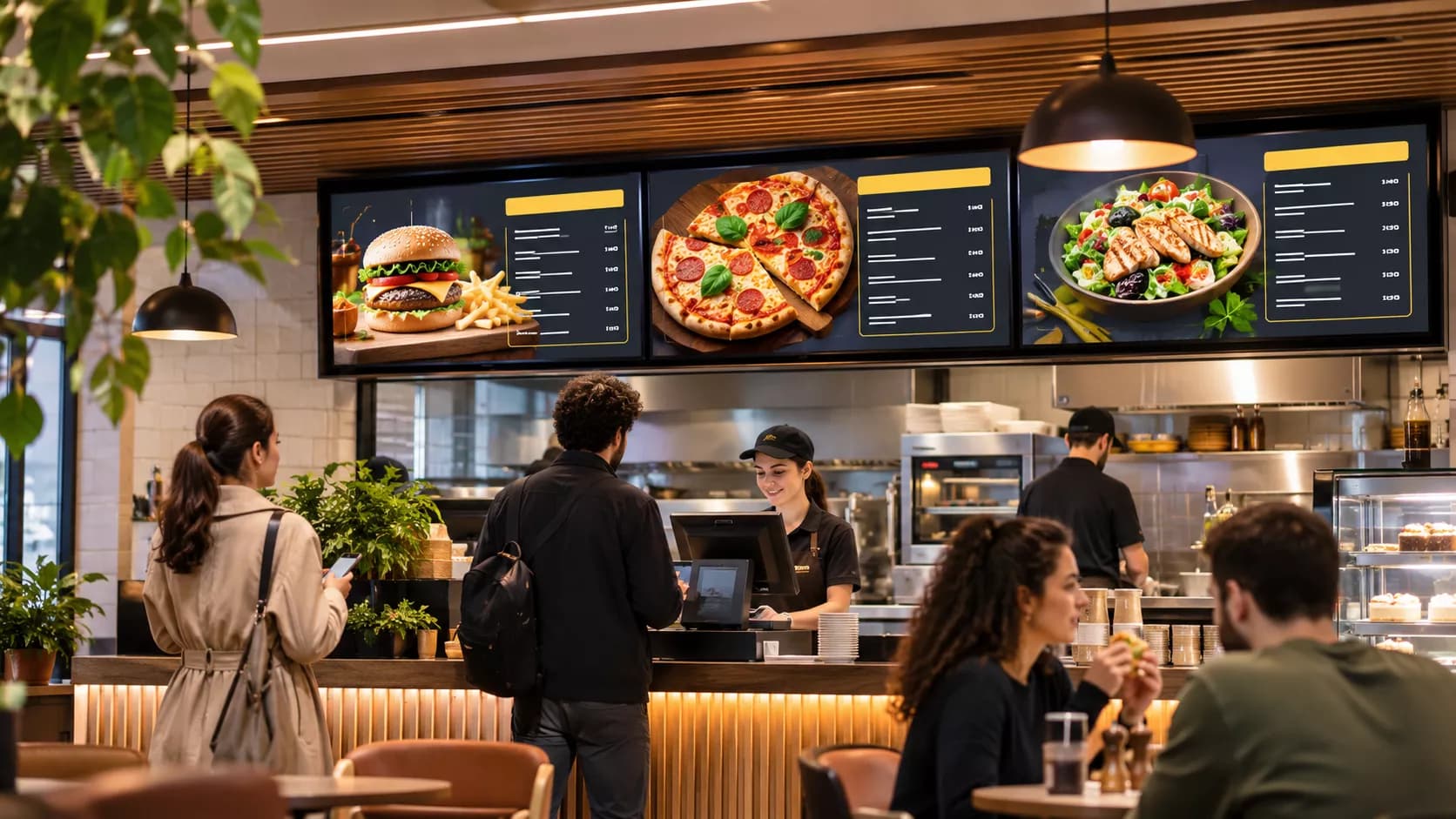
Digital Menu Board Pricing: 8 Key Factors That Determine Project Costs
Restaurants, cafés, bakeries, hotels, and corporate cafeterias are increasingly adopting digital menu board systems to modernize their operations and improve customer experiences. Replacing traditional printed menus with professional digital displays allows businesses to showcase products more effectively, update promotions quickly, and simplify menu management.
However, one of the most common questions businesses ask before investing in this technology is: How much does a Digital Menu Board cost?
Digital Menu Board pricing varies depending on several factors, including the number of displays, screen size, resolution, brightness, content management software, and installation requirements.
A small coffee shop requiring two digital menu displays will have significantly different needs from a restaurant chain operating dozens or hundreds of locations.
Therefore, evaluating digital menu board costs requires more than simply comparing display prices. Hardware, software, installation, integration, content design, and ongoing technical support must all be considered.
In this guide, we explore 8 key factors that influence Digital Menu Board pricing, explain the benefits of digital menu systems, and help businesses plan a cost-effective investment.
What Is a Digital Menu Board?
A Digital Menu Board is a professional display solution that enables restaurants and other businesses to present menus, product prices, promotions, and visual content on electronic screens.
Unlike traditional printed menus, digital menu boards can be connected to a centralized content management system, allowing businesses to update menu information remotely.
With the right digital signage software, restaurants can schedule promotions, manage multiple displays, and distribute different menu content across several locations.
For example, a restaurant can automatically display breakfast items in the morning, lunch specials in the afternoon, and dinner promotions during evening hours.
Where Are Digital Menu Boards Used?
Digital menu display systems are commonly used in:
- Restaurants and fast-food chains
- Coffee shops and café chains
- Bakeries and pastry shops
- Hotel restaurants and buffet areas
- Corporate cafeterias
- Hospital dining facilities
- Shopping mall food courts
- Drive-through ordering locations
- Multi-location food and beverage businesses
API Teknoloji's Digital Menu Board Solutions combine professional display technology with centralized content management capabilities to support businesses of different sizes.
What Components Make Up a Digital Menu Board System?
A professional Digital Menu Board system consists of more than just screens.
Several hardware and software components must work together to create a reliable, scalable, and easy-to-manage digital menu infrastructure.
The main components include:
- Commercial Digital Displays: Professional screens used to present menus, product images, prices, and promotions.
- Media Players: Devices or integrated systems responsible for displaying digital content.
- Content Management Software (CMS): A centralized platform for managing menus and promotional campaigns.
- Network Infrastructure: Internet and local network connections that support remote management.
- Mounting Equipment: Professional brackets and installation accessories.
- Digital Menu Content: Product photography, animations, promotional videos, and menu layouts.
- Integration Infrastructure: Connections with POS, ERP, and inventory management systems.
- Technical Support Services: Installation, training, maintenance, and system monitoring.
Each component contributes to the overall digital menu board installation cost.
For this reason, businesses should evaluate the complete solution rather than focusing exclusively on display hardware.
8 Key Factors That Affect Digital Menu Board Pricing
1. Number of Screens and Business Locations
One of the most important factors influencing Digital Menu Board pricing is the number of screens required.
Small cafés may need only two or three displays, while larger restaurants may require additional screens for ordering counters, pickup areas, or separate service sections.
For multi-location restaurant chains, the project becomes more complex because screen requirements may vary between branches.
For example:
- Small coffee shop: A sample configuration with 2–3 displays
- Medium-sized restaurant: A sample configuration with 4–6 displays
- Restaurant chain: A scalable display network based on branch requirements
These configurations are examples rather than fixed recommendations. The appropriate number of screens depends on each location's layout and operational needs.
Although purchasing additional displays increases the initial investment, centralized management can help reduce the effort required to update menus across multiple locations.
2. Screen Size, Resolution, and Commercial Display Technology
Digital menu display pricing is strongly influenced by screen specifications.
Commercial displays are available in different sizes, resolutions, brightness levels, and operating configurations.
Choosing the largest screen is not always the most effective approach.
Instead, businesses should evaluate:
- Display size
- Full HD or 4K UHD resolution
- Landscape or portrait orientation
- Daily operating hours
- Customer viewing distance
- Screen brightness
- Power consumption
- Warranty and service conditions
Professional commercial displays are often better suited to demanding business environments than standard consumer televisions.
Commercial-grade solutions may offer extended operating capabilities, remote device management, professional mounting options, and warranties designed for business applications.
For restaurants operating throughout the day, these features can contribute to system reliability.
Businesses looking for professional display infrastructure can also explore API Teknoloji's Corporate TV Systems.
3. Display Brightness and Installation Environment
Not all Digital Menu Boards operate under the same lighting conditions.
Displays installed inside restaurants have different brightness requirements from screens placed near sunny windows or outdoor drive-through areas.
Screen brightness is typically measured in nits.
Higher brightness levels can improve visibility in environments with strong ambient lighting. However, unnecessarily high brightness can increase equipment costs and electricity consumption.
When selecting a digital menu display, businesses should consider:
- Ambient lighting conditions
- Exposure to direct sunlight
- Customer viewing angles
- Distance between the screen and customers
- Daily operating hours
Outdoor digital menu boards may also require weather-resistant enclosures, thermal management, and additional protection.
Selecting suitable brightness specifications helps businesses balance screen readability, energy efficiency, and total project costs.
4. Media Player and Hardware Requirements
Digital menu displays require a media playback solution to present content.
Depending on the display model and software requirements, businesses may use either an integrated operating system or an external media player.
Some professional digital signage displays support compatible content management applications without additional hardware.
However, more advanced applications may benefit from dedicated external media players.
Important considerations include:
- High-resolution video playback
- Multi-zone content layouts
- Software compatibility
- Remote device management
- Network connectivity
- Automatic restart and content recovery
- Integration capabilities
- Security requirements
A small café displaying static menus may not need the same hardware performance as a large restaurant chain using dynamic pricing, animations, and integrated content.
Choosing hardware based on actual requirements helps prevent unnecessary investment.
5. Digital Menu Board Software and Licensing Costs
Digital Menu Board software is one of the most important components of a modern restaurant signage system.
A Digital Signage Content Management System (CMS) enables businesses to manage menus, pricing, promotional content, and screen schedules from a centralized platform.
Instead of manually updating individual screens, administrators can remotely publish changes across multiple displays.
Essential Features of Digital Menu Board Software
Professional digital menu board software may include:
- Centralized content management
- Remote menu updates
- Scheduled promotional campaigns
- Location-based screen grouping
- User access permissions
- Image and video content support
- Device status monitoring
- API integration capabilities
- Scalable system architecture
Digital signage software pricing can depend on screen count, licensing model, deployment preferences, required modules, and technical support services.
Businesses should evaluate both initial software expenses and ongoing subscription or maintenance costs.
Centralized Menu Management with Pood Digital Signage
Pood Digital Signage, offered by API Teknoloji, provides a professional content management solution for centrally controlling digital displays across multiple locations.
With Pood Digital Signage, businesses can:
- Manage digital menu screens across multiple branches.
- Update product prices and promotional content remotely.
- Schedule menus for specific dates and times.
- Create customized content for different screen groups.
- Monitor display and content delivery status.
- Support dynamic information through compatible integrations.
For multi-location restaurants and café chains, centralized digital menu management helps simplify operations and maintain consistency across branches.
6. Installation, Mounting, and Electrical Infrastructure
Installation is another important factor in the total Digital Menu Board cost.
Professional deployment requires secure mounting, proper screen alignment, organized cable management, and reliable electrical connections.
Installation costs may depend on:
- Wall or ceiling mounting
- Fixed or adjustable mounting brackets
- Electrical infrastructure
- Network and data cabling
- Cable management systems
- Multi-screen alignment
- Structural conditions
- Labor and transportation
For restaurants using multiple displays side by side, precise alignment is especially important.
Poor placement can reduce menu readability and create additional installation expenses.
A technical site assessment before purchasing equipment can help identify potential challenges and determine the appropriate installation method.
7. POS, ERP, and Inventory Management Integration
Modern restaurant digital signage systems can do more than display images and videos.
When supported by suitable integrations, Digital Menu Boards can receive information from existing business management platforms.
For example, product prices updated in a restaurant's POS system may be synchronized with digital menu screens.
Similarly, unavailable products may be removed from digital menus automatically when inventory information is properly integrated.
Potential integrations include:
- Point-of-sale (POS) systems
- Enterprise Resource Planning (ERP) platforms
- Inventory management software
- Product and pricing databases
- Promotional campaign management systems
- Location-specific product management platforms
Integration costs depend on the technical capabilities of the existing software and the complexity of the required development.
Systems offering accessible APIs may allow simpler integration, while older or closed platforms may require custom development.
For this reason, integration requirements should be clearly defined before requesting a final project quotation.
8. Menu Design, Training, and Technical Support
The effectiveness of a Digital Menu Board depends on more than display quality.
Content design plays an essential role in how customers understand menus and interact with the information presented.
Well-designed digital menu boards should make product categories, pricing, and promotional offers easy to recognize.
Important design considerations include:
- Brand-consistent colors and typography
- High-quality product photography
- Clear and readable pricing
- Balanced visual composition
- Logical product categorization
- Effective promotional placement
- Screen-specific layout optimization
In addition to content design, businesses should consider employee training, software updates, technical support, maintenance, and replacement equipment planning.
For multi-location restaurant chains, clearly defined support procedures can help minimize operational disruptions.
How Is the Total Digital Menu Board Cost Calculated?
There is no universal price that applies to every Digital Menu Board project.
However, businesses can estimate the overall investment by evaluating several cost categories.
Total Digital Menu Board Investment = Display Hardware + Media Players + Software + Installation + Integration + Content Design + Setup Services
Ongoing expenses should also be considered.
These may include:
- Software subscriptions
- Electricity consumption
- Maintenance services
- Technical support
- Hardware replacement
- Content updates
Evaluating these expenses provides a more realistic understanding of the total cost of ownership.
Digital Menu Board Costs for Small Cafés and Restaurants
Small businesses may benefit from a relatively simple digital menu display configuration.
For example, a two-screen café installation may include:
- Two commercial digital displays
- A compatible media playback solution
- Digital menu management software
- Basic menu templates
- Mounting and installation
By selecting only the hardware and software features required for daily operations, small businesses can avoid unnecessary expenses.
Digital Menu Board Costs for Restaurant Chains
Restaurant chains often require more advanced centralized management capabilities.
A multi-location system may include branch-specific menus, scheduled promotions, remote display monitoring, and integration with existing business software.
Centralized content management allows administrators to coordinate changes from a single platform rather than updating screens individually.
This can improve operational efficiency and reduce the manual workload associated with managing menus across multiple locations.
Benefits of Digital Menu Boards for Restaurants and Cafés
When implemented effectively, restaurant digital menu board systems can provide several operational and marketing advantages.
Faster Menu Updates
Printed menus may need to be redesigned and reproduced whenever prices or products change.
Digital menu boards allow authorized users to update content through software.
Easier Promotional Campaign Management
Restaurants can schedule different promotional offers throughout the day.
Breakfast, lunch, dinner, and seasonal campaigns can be presented according to predefined schedules.
More Engaging Product Presentations
High-quality images, videos, and animations can help products stand out and improve the visual appeal of menu displays.
Centralized Multi-Location Management
Businesses operating several locations can manage menu content from one centralized platform.
Reduced Dependence on Printed Materials
Digital menu boards can reduce recurring printing and distribution requirements, particularly for businesses that frequently update their menus.
Improved Customer Experience
Clear product categories, readable prices, and accurate menu information can help customers navigate available options more efficiently.
How Can Businesses Reduce Digital Menu Board Installation Costs?
Choosing the least expensive screen is not always the best long-term investment strategy.
To optimize Digital Menu Board pricing, businesses should consider the following recommendations.
- Assess actual requirements: Determine how many screens are needed and how they will be used.
- Choose the appropriate screen size: Consider viewing distance and menu content density.
- Evaluate brightness requirements: Avoid purchasing displays with unnecessarily high brightness.
- Review existing hardware: Determine whether current displays or media players can be reused.
- Compare software features: Select the content management capabilities required for daily operations.
- Plan for future expansion: Choose a solution that can support additional screens and locations.
- Review technical support: Compare warranty, maintenance, and service conditions.
- Calculate total ownership costs: Include software, electricity, maintenance, and hardware lifecycle expenses.
Businesses interested in evaluating display energy efficiency can also review the ENERGY STAR guidance on signage displays.
What Information Is Required for a Digital Menu Board Quote?
Before requesting a Digital Menu Board price quotation, businesses should identify their technical and operational requirements.
Providing the following information can help solution providers develop a more accurate proposal:
- Business type and industry
- Number of locations
- Number of required screens per location
- Photos of installation areas
- Landscape or portrait orientation preferences
- Approximate viewing distance
- Daily operating hours
- Existing screens or media players
- POS or ERP integration requirements
- Digital menu design requirements
- Installation cities or regions
- Centralized management expectations
- Technical support requirements
Preparing these details in advance helps ensure the proposed system matches the project's scope and operational needs.
Conclusion: Choosing the Right Digital Menu Board Solution
Digital Menu Board pricing depends on several factors, including the number of displays, hardware specifications, software capabilities, installation conditions, and integration requirements.
For this reason, businesses should evaluate digital menu solutions based on long-term operational value rather than initial equipment prices alone.
A properly planned Digital Menu Board system can simplify menu updates, improve promotional management, reduce manual processes, and create a more engaging customer experience.
Scalability, remote management, energy efficiency, and technical support should all be considered when selecting the right solution.
Get a Customized Digital Menu Board Quote from API Teknoloji
At API Teknoloji, we provide professional Digital Menu Board solutions for restaurants, cafés, hotels, corporate cafeterias, and multi-location businesses.
Our solutions bring together commercial display technology, content management software, system integration, and professional installation planning.
With our Pood Digital Signage platform, businesses can centrally manage digital displays, update menu content remotely, and schedule promotional campaigns efficiently.
Looking for the right Digital Menu Board solution for your business?
Explore our Digital Menu Board Solutions and contact API Teknoloji to request a customized project quotation based on your screen requirements, locations, and operational needs.
Frequently Asked Questions About Digital Menu Board Pricing
1. How much does a Digital Menu Board cost?
Digital Menu Board pricing varies depending on the number of screens, display size, resolution, brightness, software licensing, and installation requirements. Since every business has different needs, a customized project quotation is the most reliable way to determine the total cost.
2. Can I use a regular TV as a Digital Menu Board?
A regular consumer television may be suitable for some basic applications. However, commercial digital signage displays are often better suited for restaurants requiring extended operating hours, remote management, professional mounting, and business-oriented warranty coverage.
3. Do Digital Menu Boards require an internet connection?
An internet connection is typically required for remote content updates and centralized management. However, depending on the software and media player, previously downloaded content may continue playing during temporary internet outages.
4. Do Digital Menu Boards consume a lot of electricity?
Electricity consumption depends on screen size, brightness, display technology, and daily operating hours. Choosing energy-efficient commercial displays and appropriate brightness settings can help optimize operating costs.
5. Can Digital Menu Boards integrate with POS systems?
Yes. Digital Menu Boards can integrate with compatible POS, ERP, and inventory management systems through APIs or other supported data connections. Integration capabilities depend on the technical specifications of the existing software.
6. Can multiple restaurant locations be managed from one platform?
Yes. Centralized digital signage software allows businesses to manage menu content across multiple locations from a single dashboard. Administrators can schedule promotions and publish location-specific menus without manually updating individual screens.
7. Can menu prices be updated remotely?
Yes. Digital menu management software enables authorized users to update product prices, promotions, images, and other content remotely. This is particularly useful for restaurant chains and businesses that frequently change menu offerings.
8. How long does Digital Menu Board installation take?
Installation time depends on the number of screens, mounting requirements, network infrastructure, software configuration, and integration complexity. Small installations and large multi-location deployments have different implementation timelines.
9. Is there a monthly fee for Digital Menu Board software?
Software licensing depends on the provider and selected deployment model. Some solutions use monthly or annual subscriptions, while others offer project-specific licensing arrangements. Businesses should review software updates, maintenance, and technical support conditions before purchasing.
10. How can I get a Digital Menu Board price quote?
You can request a customized Digital Menu Board quotation from API Teknoloji by providing information about your business, number of locations, required screens, installation environment, and software expectations. Based on your requirements, the appropriate display technology, content management software, and installation scope can be evaluated.